Teachers
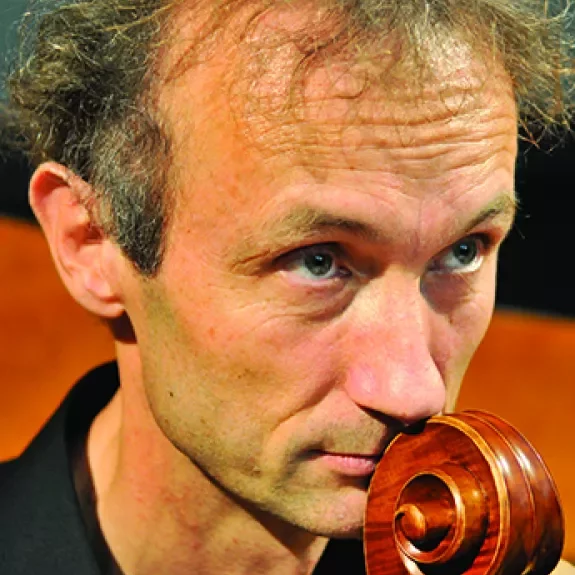
Guido Balestracci
Professor of Viola da Gamba - Ornamentation
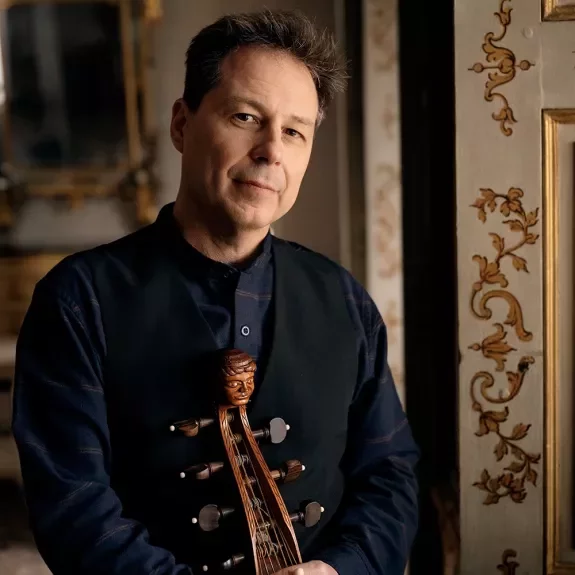
Guido Balestracci was born in Turin in 1971. He discovered the viola da gamba at the age of five within his family environment. After completing his studies at the Schola Cantorum in Basel, he began a faithful collaboration with musical personalities such as Paolo Pandolfo and Jordi Savall, performing alongside them and contributing to numerous recordings. In 1997, he founded the ensemble L’Amoroso to explore the viola da gamba repertoire more personally and to highlight the different instruments of this family. The recording programs "Consonanze Stravaganti," followed by "Seconde Stravaganze" and the transcription of Corelli's Opus V for viola da gamba, are considered pioneering works in the revival of the Italian repertoire for viols and have been awarded by international critics (Diapason d’or, 10 de Répertoire, Prix Goldberg, Premio Vivaldi della Fondazione Cini, Eccezionale de Scherzo, Choc du Monde de la Musique...). Passionate about research, Guido Balestracci is interested in rare instruments, such as the baryton, as evidenced by a CD dedicated to Haydn's trio Divertimenti, released in 2011. His interest in the Classical and Romantic periods, particularly for the arpeggione, of which he is one of the few current performers, also falls within this domain. He performs in concerts featuring a program dedicated to the transcription of the Romantic repertoire around Schubert's "Arpeggione" Sonata, which he recorded in 2019. Since the end of 2021, Guido Balestracci has also been responsible for the research project "Le Vibrato entre 1770 et 1820: un agrément à redécouvrir," which he conducts at the HEM of Geneva in collaboration with Elizabeth Dobbin and Paolo Corsi and in partnership with the CRR of Paris. He holds the position of professor of viola da gamba and 18th-century ornamentation at the HEM of Geneva and at the CRR of Paris in collaboration with PSPBB and Sorbonne University. Learn more about Guido Balestracci
Johanna Bartz
Professeure de traverso
A renowned flutist from northern Germany, Johanna Bartz excels on the international stage. A teacher of Renaissance flute at the Schola Cantorum Basiliensis since 2016, she also conducts astrophil & stella and performs as a guest musician with prestigious ensembles across Europe. Versatile, she explores contemporary and electronic music, while sharing her expertise at conferences at renowned institutions (Mozarteum in Salzburg, UdK in Berlin, ESMAE in Porto, ESMUC in Barcelona). In parallel with her academic commitments, Johanna Bartz co-founded the artist platform ‘Phosphenes’ and has made a lasting mark in music recording, contributing to numerous CDs and radio programmes. Winner of multiple international awards, she will bring her musical excellence to the Geneva University of Music in September 2024, inspiring students with her passion. Johanna Bartz's website
Patrick Beaugiraud
Professor of Baroque Oboe
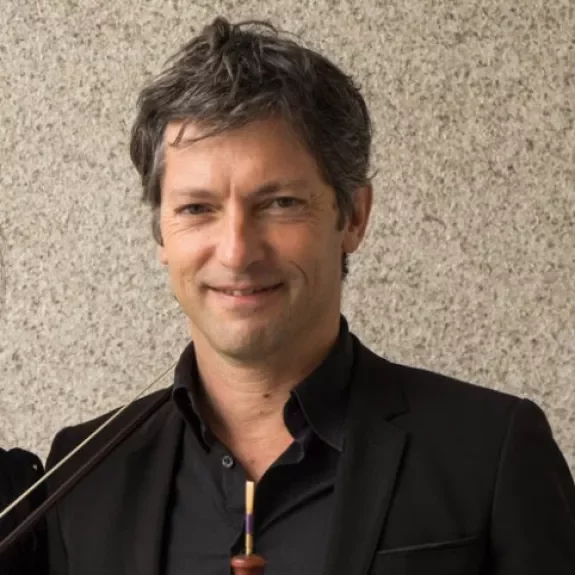
Patrick Beaugiraud studied oboe with César Ognibène, Jacques Chambon, Maurice Bourgue, and Heinz Holliger, before playing for two years with the Orchestre de l'Opéra de Lyon. He then dedicated himself more particularly to the interpretation of Baroque, Classical, and Romantic repertoires on original instruments. Appreciated by the best Baroque ensembles, he is notably sought after by the Ensemble Baroque de Limoges, Les Musiciens du Louvre, the Amsterdam Baroque Orchestra, the Bach Collegium Japan, and the Ricercar Consort. His discography is rich with recordings of oboe concertos by Bach, Vivaldi, Haydn, and numerous Bach cantatas, under the direction of Ton Koopman, Masaaki Suzuki, Sigiswald Kuijken, or Leonardo Garcia Alarcon. More recently, he has recorded Handel's cantatas, Mozart's quartet with oboe, and Couperin's "Les Goûts Réunis." He is also a founding member of the wind quintet Le Concert Impromptu. Holder of the State Diploma, he has taught modern oboe at the music schools of Macon, Montélimar, and the CNSM of Lyon before joining the Haute école de musique de Genève to teach Baroque oboe.
Maria Christina Cleary
Professor of Historical Harps - Basso Continuo on the Instrument (for Harpists)
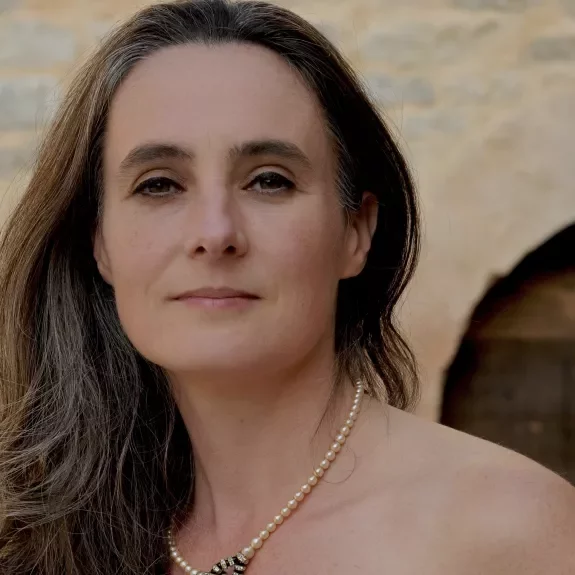
Originally from Ireland and its harp musical traditions, Maria Christina Cleary is internationally recognized as a virtuoso with an exceptionally sensitive and beautiful touch. She is one of the few specialists in medieval harp, promoting innovative techniques, particularly pedal techniques used exclusively on single-action harps. These techniques have enabled her to develop a new approach to interpreting medieval and Renaissance works. She studied in Dublin, London, The Hague, and Brussels with Susanna Mildonian, as well as at Leiden University in the Netherlands. She has won numerous awards, including the Utrecht Early Music Competition, the Nippon International Harp Competition, and the Dutch National Harp Competition. Maria Christina Cleary regularly records CDs such as "So mach’ die Augen zu," the first CD of Louis Spohr with original instruments and musical techniques of the time. She produced another CD, "Le Grazie del Violino," with her duo Arparla, featuring works by 17th-century Italian composers such as Frescobaldi, Merula, Uccellini, and Rossi, where she exclusively uses the harp as an accompaniment or solo instrument. She teaches medieval harp, improvisation, and chamber music with both ancient and modern harps. After teaching at the Guildhall School of Music in London, the conservatories in Singapore, Brisbane, Venice, Padova, the Krakow Academy of Music, the Sibelius Academy in Helsinki, and the Haute école de musique de Genève, she joined the renowned Urbino Summer Music team in 2016. Maria Christina Cleary regularly gives masterclasses, notably at the Juilliard School of Music in New York. Learn more about Maria Christina Cleary.
Bruno Cocset
Professor of Cello
Born in 1963, Bruno Cocset graduated from the Conservatoire National de Région de Tours. He was admitted to the Conservatoire National Supérieur de Musique de Lyon in 1980, where he studied with Alain Meunier, and later with Jean Deplace, leaving his class in March 1983 due to stylistic differences. He approached the baroque cello and gut string playing as an autodidact and later with Christophe Coin, becoming the first graduate of his class at the Conservatoire National Supérieur de Musique et Danse de Paris (First Prize with unanimous distinction in 1986). He also attended masterclasses by cellist Anner Bijlsma and violinist Jaap Schroeder. Twenty years of rich experiences and musical collaborations followed: Les Arts Florissants, Mosaïques, Fitzwilliam, Ensemble Baroque de Limoges, Le Concert Français, La Petite Bande, Les Musiciens du Louvre, Les Talens Lyriques, Arsys, Ricercar Consort, l’Arpeggiata, Stradivaria, l’Amoroso, Al Ayre Español, Henri Ledroit, Véronique Gens, Maurice Bourgue, Franz Brüggen, Gustav Leonhardt, Jos Van Immerseel, Jean-Claude Malgoire, Philippe Herreweghe… His most faithful affiliations are with Il Seminario Musicale by Gérard Lesne (1988-2004), and the Concert des Nations and Hesperion XX-XXI by Jordi Savall (1990-2005). In 1996, he founded Les Basses Réunies and self-produced his first solo recording: the sonatas of Antonio Vivaldi. This disc, welcomed by the Alpha label, received the Vivaldi prize from the Cini Foundation in Venice. About ten other recordings, praised by French and international music critics, led to regular invitations to perform in France, Europe, Quebec, and Russia. Each of these recording projects is linked to a sound and organological research collaboration with luthier Charles Riché. Nine instruments have emerged from this collaboration. As a musician-researcher, he thus offers a "plural" cello. He is now exclusively dedicated to this path and to teaching. In September 2005, he was appointed Professor of Baroque Cello at the Haute école de musique de Genève. Learn more about Bruno Cocset.
Lambert Colson
Professor of Cornetto
Lambert Colson studied with Françoise Defours, Pedro Memelsdorff, Bart Coen, Marleen Leicher, Bruce Dickey, and Gebhard David at institutions including the Koninklijk Conservatorium Brussel, ESMUC in Barcelona, the Schola Cantorum Basiliensis, and the HFK in Bremen. His collaborations include working with ensembles and conductors such as Scherzi Musicali, Le Poème Harmonique (Vincent Dumestre), Holland Baroque, La Fenice (Jean Tubéry), Pygmalion (Raphaël Pichon), B’rock, Collegium Vocale (Philippe Herreweghe), Correspondances (Sébastien Daucé), Cappella Mediterranea (Leonardo Garcia Alarcon), and Continuum. He leads his own musical projects, directly derived from research undertaken in recent years with his ensemble InAlto. InAlto's most recent recordings have been critically acclaimed by the European press: Diapason d’Or & Diapason d’Or of the Year 2017, Choc de Classica, 5 stars Rondo Magazin, Joker Crescendo, Clé d’Or Res Musica, and selections of the year for Libération and Le Monde. He currently teaches cornetto, ensemble music, and ornamentation at the Koninklijk Conservatorium Brussel and the Haute école de musique de Genève. In his continuous exploration of his instrument, he is pursuing a doctoral program focused on the mute cornett and its use in 17th-century Germany, in a joint project between the Koninklijk Conservatorium and the Vrije Universiteit Brussel. The thesis will be publicly presented in 2024. He has had several pieces dedicated to him by contemporary composers such as Zad Moultaka, Fabrice Fitch, and Bernard Foccroulle. Eager for unusual collaborations, he works with choreographer Catherine Contour and explores the practice of hypnosis. He increasingly explores the possibilities offered by his instruments in contemporary music, collaborating with artists like Liesa van der Aa, Shara Nova (My Brightest Diamond), Petur Ben, Mugison, and Efterklang. He is also involved in several jazz and improvisation projects with artists such as Emmanuel Baily, Xavier Rogé, Franck Vagané, Adam Woolf, Jon Birdsong, and Eric Vloeimans. Learn more about Lambert Colson.
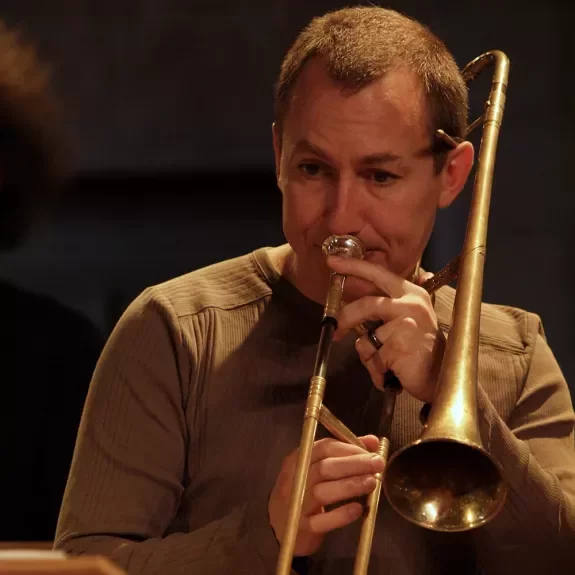
Stefan Legee
Professor of Sackbut
Stefan Legée began studying trombone in Reims with Amédé Grivillers before entering the Conservatoire National Supérieur de Musique de Paris, where he obtained a first prize in trombone unanimously. He received the Certificate of Aptitude in trombone in 1985 and won third prize at the International Competition in Prague in 1987. A member of the brass quintet Magnifica from 1985 to 1990, he won several international prizes with this ensemble (Baltimore and Narbonne). In 1996, he obtained a certificate of advanced studies in sackbut with high honors at the CNSM of Lyon. From 1985 to 2006, Stefan Legée was the solo trombone of the Orchestre Colonne. He regularly performs with the Concerto Vocale conducted by René Jacobs, Hespérion XXI led by Jordi Savall, Europa Galante under Fabio Biondi, La Fenice by Jean Tubéry, the Sacqueboutiers de Toulouse, and the Concert Brisé led by William Dongois. He is also actively involved in contemporary music, playing with ensembles such as Erwartung (Bernard Desgraupes), Sine Qua Non (Nicolas Brochot), and Ars Nova (Philippe Nahon). In 1996, he premiered Dominique Probst's concerto for trombone and string orchestra, which was dedicated to him. He participated in concerts with Ensemble 2e2m from 2002 to 2005. Numerous recordings document his work. These include Ex Libris with La Fenice on Opus 111, L’âge d’or du cornet with the Concert Brisé and William Dongois on K 617, the Passione di Jesù by Caldara with Fabio Biondi for Virgin Veritas, and a monograph on Philippe Hersant with Ensemble Ader for Musique Française d’Aujourd’hui. Stefan Legée has given numerous masterclasses in sackbut. He teaches trombone and sackbut at the Conservatoire à Rayonnement Régional de Saint Maur and sackbut at the Haute école de musique de Genève. Learn more about Stefan Legée.