Teachers
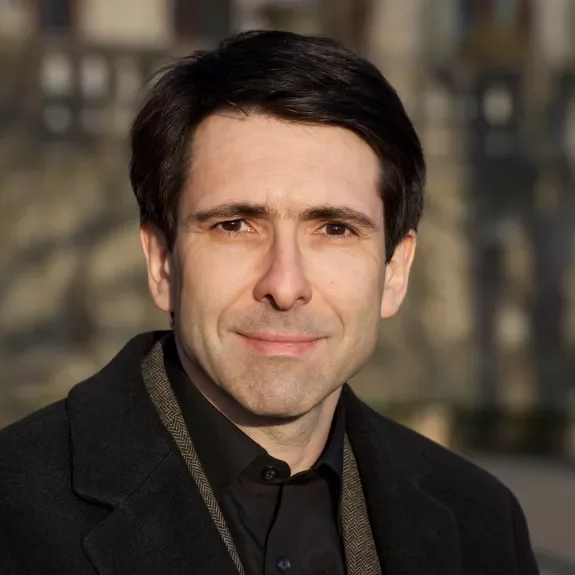
Luciane Beduschi
Professeure d'écriture
Luciane Beduschi a enseigné l’histoire et la théorie de la musique en France, à la Sorbonne et à l’université Paul-Valéry (2007-2012), ainsi qu’aux États-Unis, au Skidmore College, dans l’État de New York (2012-2015). Elle a été Wallace Fellow, puis chercheuse associée de l’université de Harvard au Center for Italian Renaissance Studies, I Tatti, à Florence, en Italie (2018-2022). En 2023, Luciane a rejoint la NYU Paris pour y enseigner l’histoire et la théorie de la musique.Ses travaux sur l’analyse musicale et l’histoire de la musique, ainsi que quelques enregistrements, partitions, préfaces et livrets de disque ont été publiés en Europe (France, Belgique, Allemagne, Angleterre, Suisse, Italie, Portugal), aux États-Unis et au Brésil.Sa thèse de doctorat, Sigismund Neukomm : sa vie, son œuvre, ses canons énigmatiques, a été distinguée par la Chancellerie des universités de Paris comme l’une des cinq meilleures thèses en sciences humaines soutenues à Paris en 2008. Ses travaux ont porté sur les incohérences dans les notices biographiques consacrées à la vie de Sigismund Neukomm, ainsi que sur la constitution d’un catalogue thématique de ses plus de 2.000 œuvres. Luciane a également travaillé sur la réception de l’analyse schenkérienne en France, ce qui a abouti à la rédaction d’un manuel destiné au public francophone. Ses travaux sur les canons énigmatiques comprennent des analyses des solutions proposées et des recherches contextuelles sur cette pratique. Elle a publié récemment un livre présentant les solutions proposées par Luigi Cherubini pour les 72 canons énigmatiques de la Storia della musica du père Martini accompagnées d’une étude sur cette pratique aux 18e et 19e siècles : Padre Martini’s Closed and Enigmatic Canons with Solutions by Luigi Cherubini. A 19th-Century Guide into Renaissance Music Riddles (Brepols, 2024).
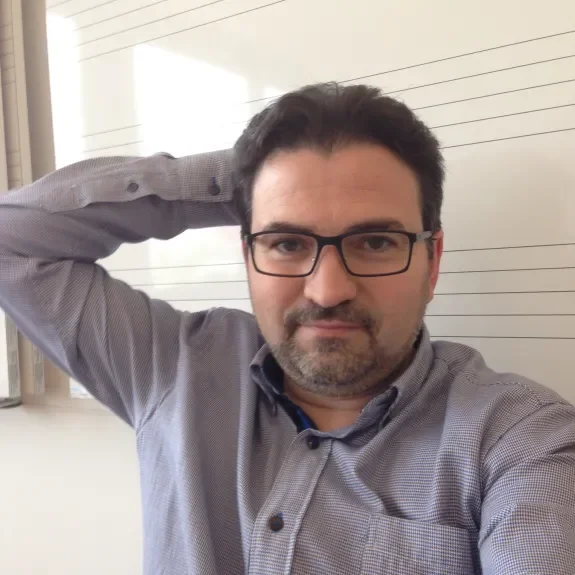
Nicolas Bolens
Professor of Counterpoint, 20th-Century Writing, and Practical Writing
En associant traditions et explorations nouvelles des matières sonores, les œuvres de Nicolas Bolens investissent l’espace en valorisant les éléments et les sujets qui se présentent à lui. Combining traditions and new explorations of sound materials, the works of Nicolas Bolens invest in space by enhancing the elements and subjects that present themselves to him. His music is regularly connected to other elements: texts, films, places, evocations... In each context, he seeks an authentic dramaturgy that promotes unprecedented settings. For example, with the Batida ensemble, he imagined "Welcome to the Castle" (2017), three musical acts for musicians moving through the Allymes Castle near Amberieu-en-Bugey. For the Gémeau Quartet, he wrote "La Ville Oblique" (2013), a string quartet conceived as a musical extension of the short film "Un Chien Andalou" by Dalí and Buñuel. Written words, most often poetic, permeate his entire production. He has composed on poems by Celan, Sachs, Mallarmé, Char, Blok, Khayyam, Michaux, Éluard, Basho, Neruda, Rilke, Adonis, Shakespeare... These authors, from various times and origins, have led him to integrate many languages into his works, considering their sonic as well as semantic potentials. Orchestration also holds an important place in his work, rethinking the instrumentation of certain past works. In 2018, he re-orchestrated "Lieder eines fahrenden Gesellen" and the 4th Symphony by Gustav Mahler for the Lemanic Modern Ensemble under the direction of conductor Pierre Bleuse. Commissioned by the association Ouverture Opera, his recent rewriting of Mozart's "The Magic Flute" follows the same approach. Nicolas Bolens has notably collaborated with the Batida ensemble, the Lemanic Modern Ensemble, the Swiss Chamber Soloists, the Ensemble Vocal de Lausanne, the Ensemble Vocal Polhymnia, the Ensemble Vortex, the Basler Madrigalisten, and the Ensemble Vocal Séquence... Born in Geneva, he first studied piano at the Conservatoire de musique de Genève, then completed his training in the composition class of Jean Balissat. He further honed his skills with Rudolph Kelterborn, Klaus Huber, Edison Denisov, and Eric Gaudibert. He is the recipient of numerous composition prizes, including those from the Orchestre de Chambre de Lausanne (1993) and the Banque Cantonale Neuchâteloise (2002), as well as a scholarship from the Leenaards Foundation (1998). An engaged pedagogue and artist, he teaches counterpoint, 20th-century writing, and composition at the Haute école de musique de Genève, where he has been the head of the Composition and Theory Department from 2015 to 2024. He is also involved in several institutions related to musical creation in Switzerland, including the Swiss Musicians Association, the Archipel Festival Association, the Nicati-de-Luze Foundation, and the Artistic Council of the Geneva Competition. Learn more about Nicolas Bolens
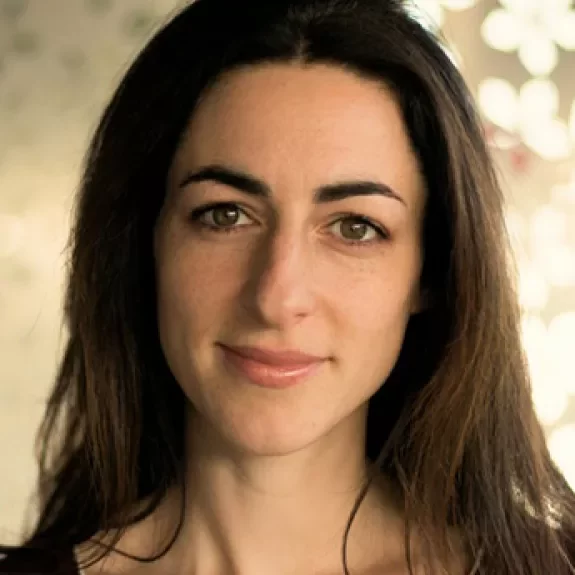
Charlotte Perrey Beaude
Professor of Writing Practice - Cadence Writing - Music Theory
Charlotte Perrey began her musical studies with piano, quickly developing a strong inclination for improvisation and composition. After studying in advanced mathematics classes, she fully devoted herself to music and specialized in writing under the guidance of Stéphane Delplace. She continued her studies at the Conservatoire National Supérieur de Paris, where she earned First Prizes in Harmony, Counterpoint, 20th-21st Century Writing, Fugue and Forms, as well as the Marcel Dautremer Prize. She studied notably with Jean-François Zygel, Thierry Escaich, and Marc-André Dalbavie. She currently teaches at the Haute école de musique de Lausanne and the Haute école de musique de Genève.
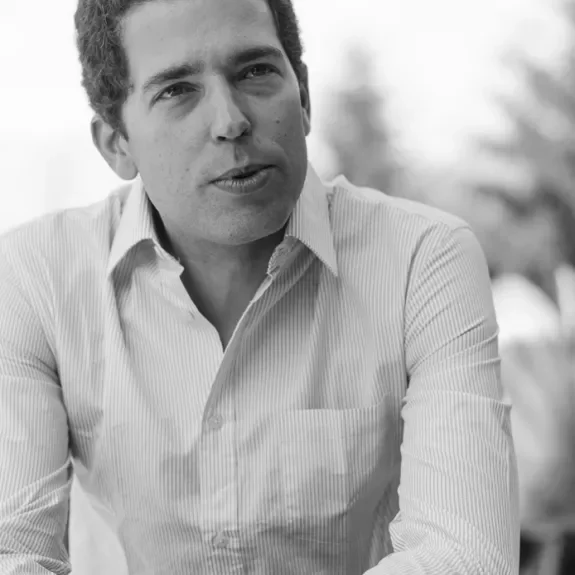
Grégoire Rolland
Professeur d'écriture et analyse
Compositeur et organiste, Grégoire Rolland est diplômé du Conservatoire National Supérieur de Musique de Paris, où il obtient un Master d’écriture, un prix d’analyse, un Master d’orgue et un prix d’orchestration. Il est également titulaire d’un Master de composition de la Haute école de musique de Genève et d’une licence de musique et musicologie de la Sorbonne. Au cours de sa formation, il travaille notamment avec Olivier Latry, Thierry Escaich, Michael Lévinas, Marc-André Dalbavie, Pascal Dusapin et Michaël Jarrell.Son œuvre, du solo à l’orchestre, puise dans la nature, le chant grégorien et les cultures asiatiques. Il développe depuis plusieurs années une technique de composition qui associe la temporalité de l'écriture des idéogrammes asiatiques et le déploiement de formes musicales inhérentes. Sa recherche s’articule également autour du biomimétisme et des environnements sonores (soundscapes). Lauréat de plusieurs concours internationaux de composition, il reçoit des commandes de Radio France, Musique Sacrée à Notre-Dame de Paris, l’Orchestre National des Pays de la Loire, Toulouse les Orgues, La Bâtie de Genève ou encore l’Orchestre de Chambre de Paris.Ses œuvres sont jouées en Europe, aux États-Unis et au Japon par de nombreux interprètes et ensembles, et font l’objet de plusieurs enregistrements salués par la critique, dont Les Sacrements (2020), Shēng (2022) et Cordes tressées (2025).Lauréat de la Fondation Banque Populaire (2016) et du prix d’encouragement en composition de l’Académie des Beaux-Arts (2021), il est également organiste titulaire de la Cathédrale d’Aix-en-Provence et professeur au CRR d’Avignon. En 2024, il remporte le prix des collégiens et le prix des professeurs lors des Superphoniques organisées par la Maison de la Musique Contemporaine. Il est également nommé compositeur en résidence à l’Auditorium-Orchestre National de Lyon pour les saisons 2024-2025 et 2025-2026.Site internet de Grégoire Rolland
Rodolphe Schacher
Professor of Writing Practice - Analysis - Harmony - Counterpoint
Franco-Swiss composer and pianist Rodolphe Schacher was born in France in 1973. Schacher pursued his musical studies in Paris, Geneva, and Zurich, under the guidance of Michael Jarrell, Thierry Escaich, Gerald Bennett, and Ulrich Koella. He has been awarded five first prizes (harmony, counterpoint, Renaissance counterpoint, fugue and forms, and 20th-century music) at the CNSM in Paris and received the composition and theory diploma with honors, as well as the concert diploma in chamber music from the Zurich University of the Arts. Alongside his artistic activities, Schacher teaches analysis and writing at the Haute école de musique de Genève, writing at the Haute école de musique de Lausanne, and taught composition until June 2015 at the Zurich University of the Arts.
Antoine Schneider
Professor of Practical Writing - Contrepoint
After studying violin and musicology in Geneva, Antoine Schneider furthered his musical theory education in Zurich with Burkhard Kinzler and Andreas Nick. He also trained in musical direction, piano, and baroque violin. He is currently a professor of solfège and counterpoint at the Haute école de musique de Genève and the Haute école des arts de Berne, as well as a professor of musical training at the ESM Bourgogne-Franche-Comté (Early Music Department). In his teaching, he specializes in the practices of musical improvisation during the Renaissance period. He is regularly invited to give masterclasses across Europe and collaborates with Jean-Yves Haymoz, Barnabé Janin (CNSMD Lyon), and the Helicona project. He is the co-responsible for the website Super librum cantare (www.superlibrum.com).